

Writing was never meant to be done in a vacuum
1-1 coaching & editorial support for authors, academics, service providers, creatives, and business owners who need actual human help

“This was so much better than spending an hour arguing with Claude!”
–Robin Joy Hilton, Online Business Manager + Content Strategist, creator of The Flow & The Long Exhale newsletters
There’s a writing montage in Greta Gerwig’s adaptation of Little Women where Jo March (played by Saorsie Ronan) gets a cramp in her hand—so she just moves the quill to her left hand and keeps freaking writing.
By lamplight. In a paper-strewn attic. Insane!
This is what most people picture when they conjure the image of a writer—a tortured genius, a curl of tobacco smoke, the words spooling out in an uncontrollable torrent.
It’s all very arty, dreamy, a little punk rock. The writer, possessed by the muse, perfectly at home in their solitude.
So when you get paralyzed by your blank screen…
👉🏽 or stuck on a crunchy plot question
👉🏽 or spend 45 minutes “accidentally” watching dog videos
👉🏽 or your own writing puts you to sleep
👉🏽 or you feel so overwhelmed that you can’t even fathom where to start—
It’s all too easy to believe that it’s some kind of personal failure. That you lack discipline; you’re not creative; you’re unmotivated.
That you’re “not a writer.”
But none of that is true—in fact, all of these experiences are pretty normal.
That’s just… what it is to write.
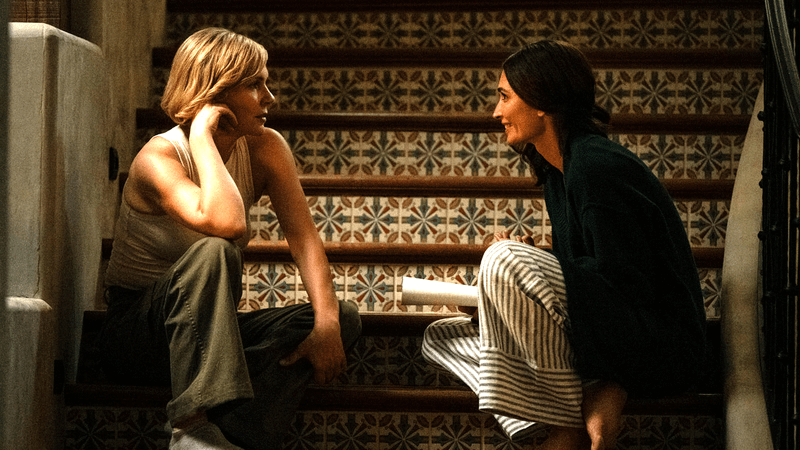
Zosia: What was your best day writing?
Carol: [snorts] No such thing… That’s like asking, uh, “What’s the most fun you ever had getting your teeth drilled?”
Pluribus, Season 1 Ep. 8, AppleTV
Writing can be hard, and stubbornly slow.
And yes, it’s often done in isolation, especially now.
So when you come up against a sticking point, there’s no feedback loop—no one to offer a gut-check or a word of encouragement, or a gentle nudge to close out that “research” tab and just get back to the page.

To alleviate this discomfort, you can turn to AI (and most of us do).
And that helps a little—but just like Carol up there, what every writer truly craves, what’s actually missing, is a human exchange of ideas.
👉🏽 A real reader to help you sift through your ideas and figure out which ones of them are worth writing about.
👉🏽 A sharp-eyed editor who can spot the most important thread inside your tangled-up tangents and straighten that shit out.
👉🏽 A container to help get your ass in the chair, writing without procrastination—or to figure out what’s making it hard for you to do that, and how to work around it.
👉🏽 A calming, encouraging voice reminding you that you ARE a writer, despite all the reasons you keep telling me you’re not.

This is the work I’ve been doing for the past decade as a copywriter, messaging strategist, academic editor, and developmental editor on as-needed, ad-hoc basis.
And now I’m offering it as a real 1-1 service all its own.
"This is my favorite thing I do every week.”
–TORY PROPPE, MARKETING STRATEGIST
(AND NOW, SHORT STORY AUTHOR!)

Do you need a writing coach? Let’s find out.
This service is brand-new and still in beta mode. If writing is a part of your life and work—or it’s not but you want it to be—and you want help from a smart human who knows what she’s doing, you should totally book a call.
Beyond that, if you are…
A business owner planning to pull back from social media and go all-in on long form content you actually own
An academic who’s been away from your work for a while due to pregnancy, relocation, family obligations, and other life circumstances
A service provider burned out on writing for your clients, with no juice left for your own work
A doctoral candidate who needs help getting your dissertation over the finish line
A writer who’s doing all the right things but has lost the magic
A newsletter creator who’s publishing consistently but bored by your own writing
A professional who’s never considered yourself a writer but whose work increasingly requires it
Then I would love to meet you.
How 1-1 Writing Coaching Works

Live, one-hour calls
We’ll talk through whatever you're working on—a draft, a story problem, academic overwhelm, organization, motivation.
I’ve designed this to be flexible and responsive to what you need at any given time.
Sometimes, I’ll offer a mini lesson on writing craft, grammatical conventions, style, or structure. Other times we’ll have more of what I think is a typical “coaching” conversation, talking through things like confidence, imposter syndrome, scheduling regular writing time, or this weird thing where people think their writing is boring even though it’s not.
Each call will conclude with “homework”—for both of us. (More on that in a sec.)
This might include a writing exercise, recommended reading, a practice or process to try, or something else. I often make these up on the fly depending on how our call goes—and I’m always mindful of how much is on your plate.

Hands-on feedback, edits, suggestions, and support
This is MY homework!
In between calls, I’ll read your drafts, peppering them with comments, questions, edits, and suggestions as needed.
I’ll be a sounding board for your ideas.
I’ll come up with random ideas for your piece, whether it’s a research question I want you to include or a side plot for one of your characters.
You can also email me anytime.

What this is:
A supportive and encouraging partnership where one of us just happens to be a longtime professional writer and editor.
A dedicated space for you to carve out the attention and intention good writing requires.
Permission to say what you want, how you want, and to start seeing yourself as a writer
What it’s not:
A rigid curriculum or framework you have to follow.
“Accountability” whip-cracking—most of my clients are way harder on themselves than I’ll ever be. 🙂
Just like… vibes
A red-pen arsonist who’ll tear up your original work and make it unrecognizable
Here’s what some of my clients have been up to since we started working together:
Tory has written 10,000 words of a brand-new short story that all started with a random writing prompt I gave her in Week One (plus she just submitted a whole different short story to a writing contest)
Valerie started a new Substack to start getting her (many) ideas out into the world; she’s been publishing consistently every week since she launched
Ksenia’s Master’s Degree is back on track after a two-year hiatus, with two 25-page papers underway
1-1 Coaching services are currently in beta, and are priced accordingly.
That means:
You’ll save money
I’ll ask you for occasional feedback and reflection to help me solidify how I talk about this service in the future
You get to feel smart and cool for being an early adopter

Option One: Weekly Coaching Calls
$650/month
So far, weekly calls seem best for clients who are working on their process:
setting up and sticking to a regular writing practice
needing more regular check-in points and face-to-face convos
struggling with motivation, procrastination, and overwhelm

Option Two: Biweekly Coaching Calls
$400/month
Biweekly calls seem best for writers who are working on their craft. Writers who:
already have an established writing practice and/or are consistently creating a lot of content
feel disconnected, unsatisfied, uninspired, or bored by your own writing—like it’s missing something but you don’t quite know what
need more time to work through your ideas
prefer more spread-out writing sessions
Of course, these distinctions are only based on my current client roster and my best guesses.
Don’t let this language pigeonhole you—that’s the beauty of beta.


Meet your coach…
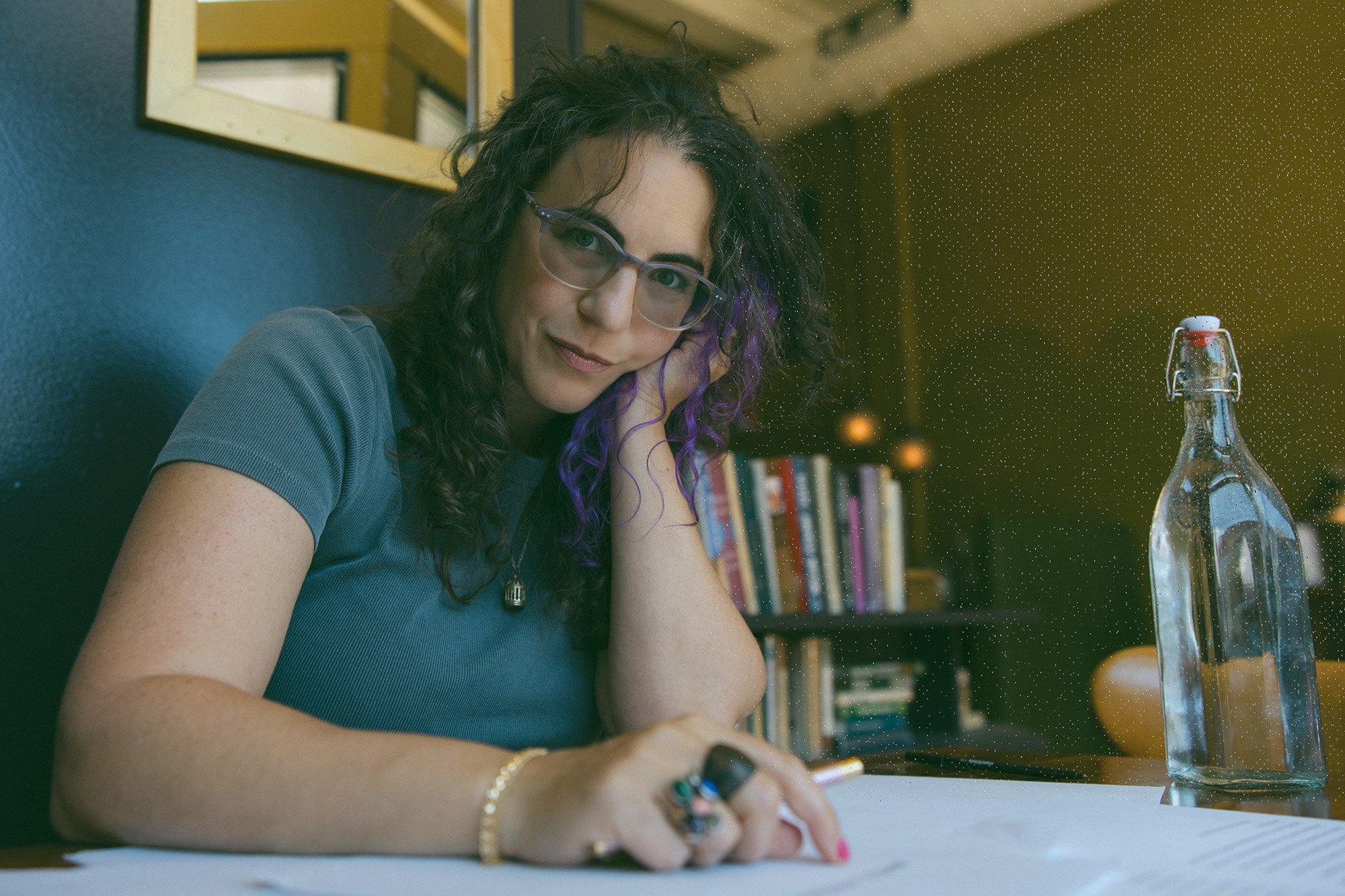
Hi! I’m Samantha Pollack (pronounced like the artist, or the fish). But you can call me Sam. I’m a writing coach and developmental editor.
I founded Indie Copy Studio in 2023 and am the creator of The Punkhouse Writing Philosophy—five house rules that apply a punk ethos to the act of writing—and The Craft, a 10-week writing workshop for business owners who prefer to write their own copy.
I’ve been a bartender, a barista, an elite personal trainer, a park maintenance worker, and the stoner at the antique photo booth at Six Flags (before it was even a Six Flags—I’m also a proud GenXer).
Oh, and I also have a decade of experience as a copywriter and email marketing strategist.

GET thE mixtape
The Coffee Break
“Cassingle” sized pieces on writing craft and process, along with cultural observations from a wizened GenXer with over a decade of experience in the writing & marketing trenches.
The B-Sides
Recent blog posts, reading recommendations, and cool things worth paying attention to.
Demo Tracks
Special promotional periods that focus on a particular way to work with me. You’ll be able to opt out of these when the time comes.
Sign up below:

Ready to fall in love with your own writing?
I can’t wait to see what you’re working on!
Or email me: sam <at> indiecopystudio <dot> com